Patterns
Agent design patterns:
- Give agents a computer (CLI and files)
- Progressive disclosure
- Offload context
- Cache context
- Isolate context
- Evolve context
Architecture
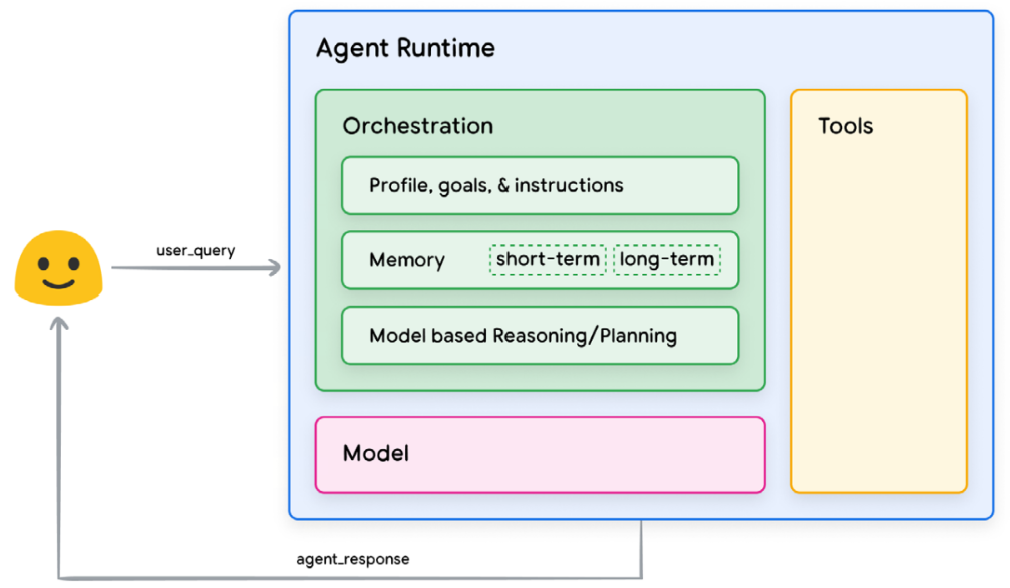
General agent components:
- LLM (brain)
- Prompting (instructions)
- Memory
- External knowledge
- Tools
First-Principles
从李世石与 AlphaGo 的围棋对战中的第 37 手, 我们可以总结出第一性原理 智能体的基本原则:
- Replica agents: 当流程需要人工审核、代理作为用户的副驾驶员或与仅限 UI 的旧版工具集成时,使用仿生学。
- Alien agents: 当目标是纯粹的结果效率时,使用第一性原理。
Asymmetry of Verification and Verifiers
Asymmetry of verification and verifiers law:
所有可解决且易于验证的问题, 都将被 AI 解决.
Agent Traffic
Value of highly polished UI and enterprise applications will decrease, value of performant, reliable, extensible API will increase.
Agent-Native
Agent-native apps should:
- Parity (对等性): 用户通过 UI 完成任务
<->Agent 通过工具实现. - Granularity (细粒度): tools should be atomic primitives.
- Composability: 有了上述两点, 只需编写新的提示词即可创建新功能.
- Emergent capability.
- Files as universal interface: files for legibility, databases for structure.
- Improvement over time:
- Accumulated context: state persists across sessions.
- Developer-level refinement: system prompts.
- User-level customization: user prompts.
**Who I Am**:
Reading assistant for the Every app.

**What I Know About This User**:
- Interested in military history and Russian literature
- Prefers concise analysis
- Currently reading *War and Peace*

**What Exists**:
- 12 notes in /notes
- three active projects
- User preferences at /preferences.md

**Recent Activity**:
- User created "Project kickoff" (two hours ago)
- Analyzed passage about Austerlitz (yesterday)

**My Guidelines**:
- Don't spoil books they're reading
- Use their interests to personalize insights

**Current State**:
- No pending tasks
- Last sync: 10 minutes ago
Agent-native Product
Build capable foundation, observe what users ask agent to do, formalize patterns that emerge:
- Common patterns: domain tools.
- Frequent requests: dedicated prompts.
- Unused tools: remove.
Self-Evolving
Self-evolving agents, use runtime experience and external signals to optimize future behavior:
- Update evaluation datasets.
- Enhanced context engineering.
- Tool optimization and creation.
- Refine guardrails.
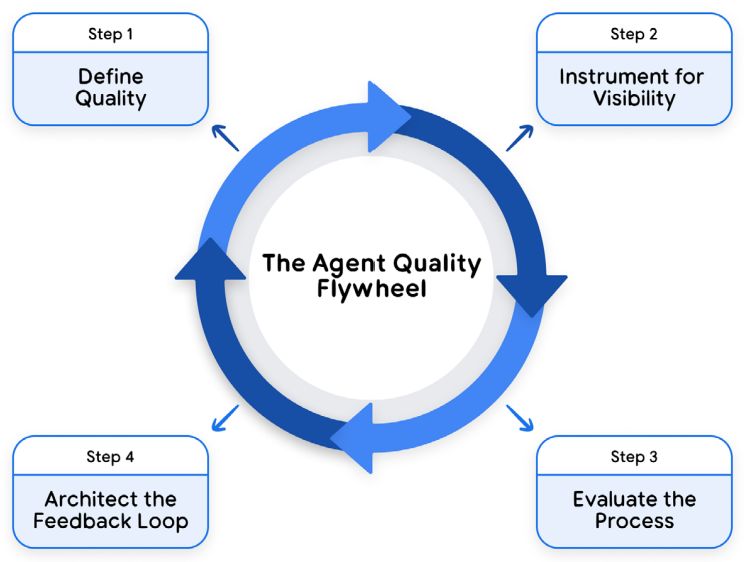
AgentOps
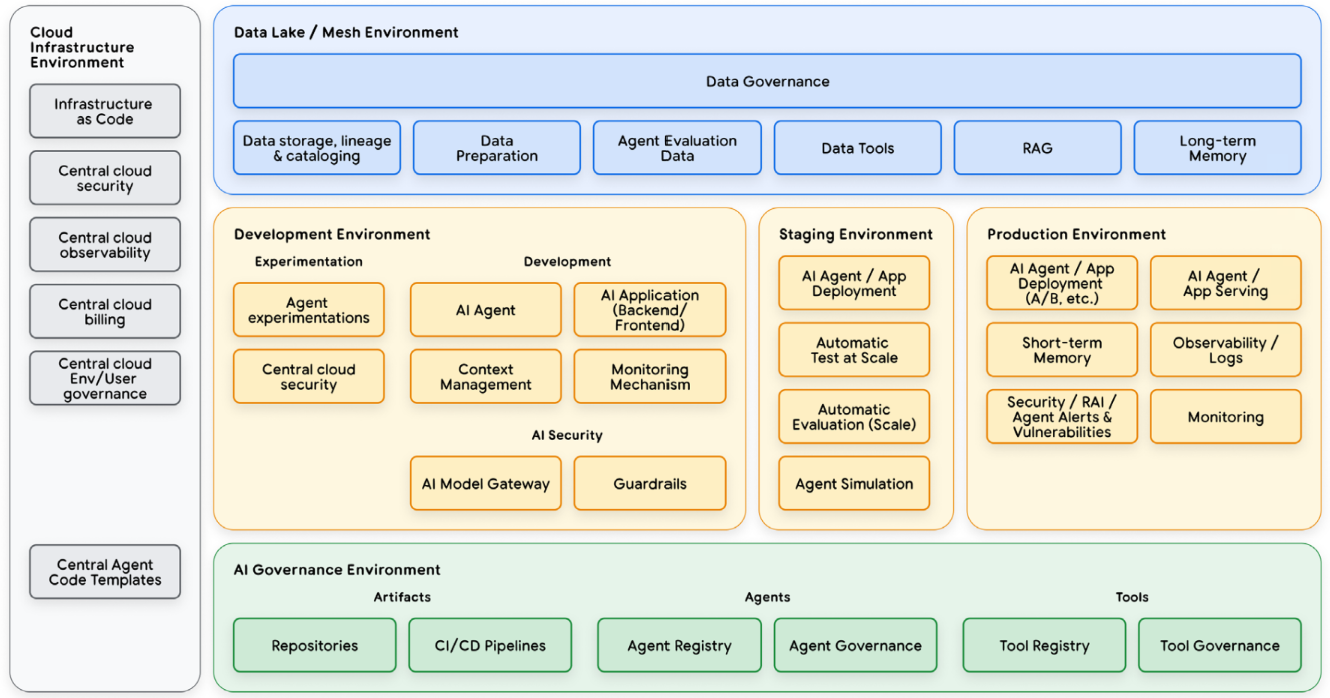
References
- Agents whitepaper.
- Minimal coding agent design patterns.